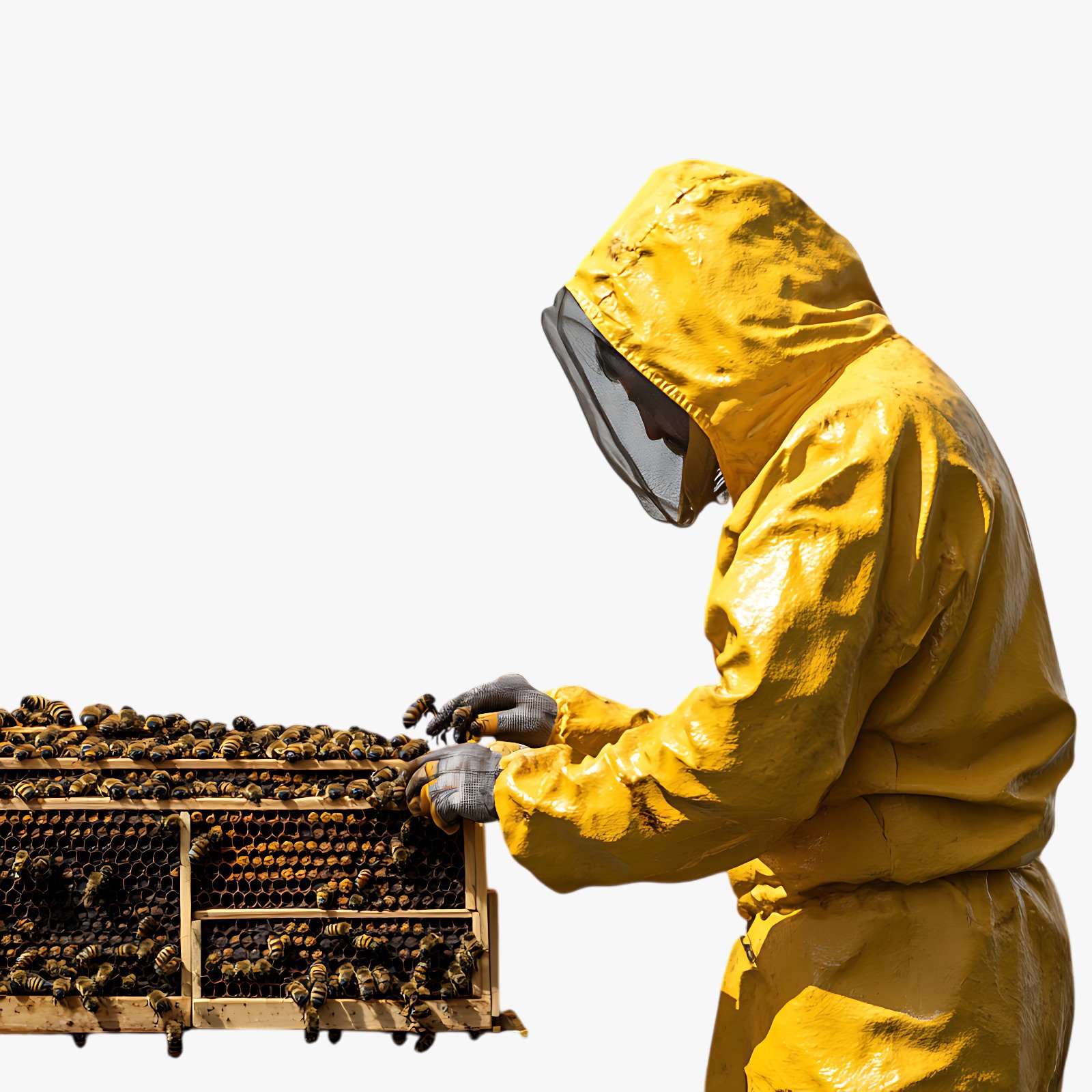
Reading Your Colony's Health
One of the most important skills a beekeeper develops is the ability to assess colony health during inspections. Rather than looking for problems, start by looking for signs of a healthy, thriving colony. Here are the 10 most important indicators.
1. Active Foragers at the Entrance
A healthy colony has a steady stream of foragers coming and going during daylight hours. Watch for bees returning with full pollen baskets (corbiculae) on their hind legs — this means there's brood to feed and the queen is laying.
2. A Solid Brood Pattern
When you pull a brood frame, look for a compact, consistent pattern of capped brood with very few empty cells. A "shotgun" pattern with many gaps can indicate disease, a failing queen, or inbreeding issues.
3. Eggs and Young Larvae Present
Seeing tiny white eggs standing upright in cells confirms your queen was laying within the last 3 days. Young C-shaped larvae floating in royal jelly indicate active, healthy brood rearing.
4. Calm Temperament
While bee temperament varies by genetics, a healthy colony is generally calm during inspections. Excessively defensive behavior can indicate queenlessness, pest pressure, or environmental stress.
5. Adequate Food Stores
Check the frames flanking the brood nest for capped honey and pollen stores. During the active season, 2-3 frames of honey on each side of the brood nest is ideal. Pollen should be visible in multiple colors, indicating diverse forage sources.
6. Growing Population
In spring and early summer, a healthy colony's population should be visibly increasing. Frames that were sparse should be filling with bees. If population is stagnant or declining during the growth season, investigate further.
7. White Wax Production
Fresh, bright white beeswax on new comb or capping indicates the colony is actively building and storing. Wax production requires significant energy, so it's a sign the colony has ample resources.
8. No Unusual Odors
A healthy hive has a pleasant, warm smell of honey and wax. Foul or sour odors can indicate American Foulbrood, European Foulbrood, or fermenting stores — all serious issues requiring immediate attention.
9. Low Varroa Mite Counts
Regular monitoring shows mite counts below the treatment threshold (less than 2-3 mites per 100 bees). Low mite levels mean fewer virus transmissions and healthier individual bees.
10. Queen Cells Are Absent (or Appropriate)
During the active season, the occasional play cup is normal. But multiple charged queen cells (with larvae and royal jelly) outside of swarm season can indicate supersedure — the colony replacing a failing queen.
Keep Records
The best way to track colony health is to keep inspection records. Note the date, weather, what you observed, and any actions taken. Over time, these records become invaluable for understanding your colonies' patterns.
Always wear proper protective equipment during inspections. Safe beekeeping is good beekeeping.